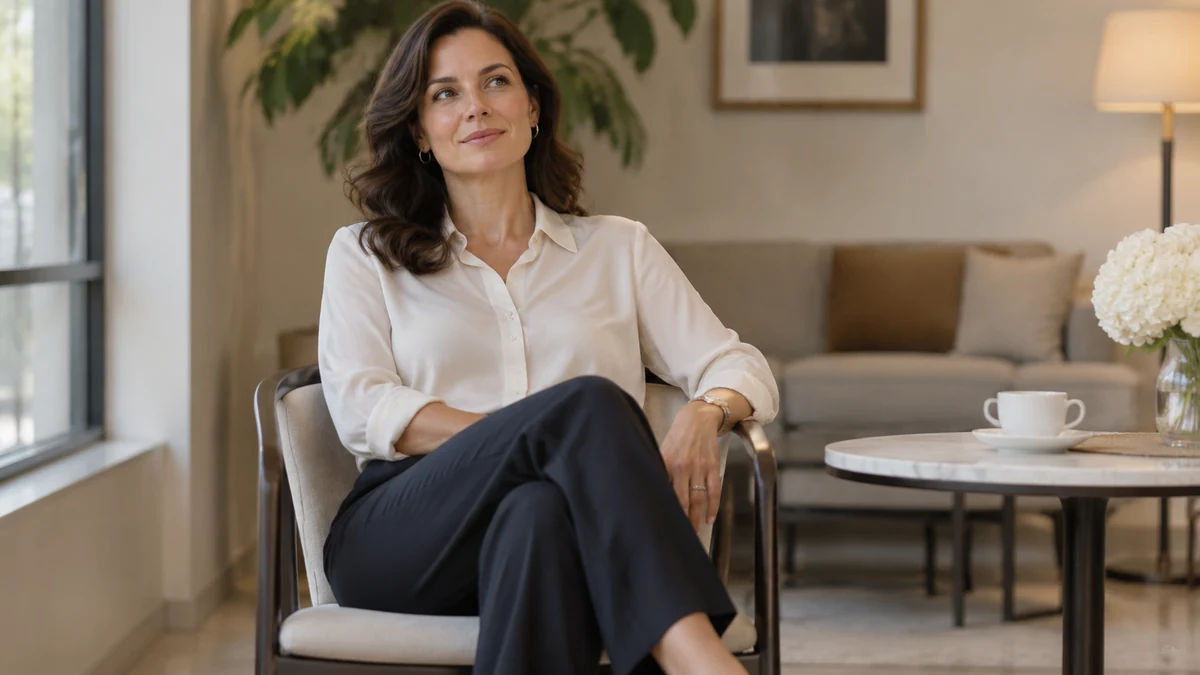
For many people, sitting with one leg over the other feels completely natural. Sometimes it is about comfort; at other times it is simply a habit developed over time. There is no single explanation that applies to everyone.
One sitting position, many reasons
The way we sit can depend on several factors: the height of the chair, the space around us, the temperature, what we are wearing or simply the desire to change position after sitting still for a long time.
For some people, crossing their legs comes naturally, while others prefer to keep both feet on the floor. Preferences can also change throughout the day.
Body language is not a secret code
Some people associate crossed legs with confidence, reserve or interest. These are common interpretations, but not scientific rules: a single gesture cannot reliably reveal what someone is thinking or feeling.
To understand a situation better, it is more useful to look at the whole picture. Facial expressions, the tone of a conversation, general posture and the relationship between people can offer clues, but they cannot reveal intentions with certainty.
Comfort matters too
Comfort depends on the person and the circumstances. If a position causes discomfort, tingling or tension, it may be worth changing position and moving about occasionally. There is no reason to attach any special meaning to the gesture.
The idea that crossed legs automatically reveal a personality trait is also an oversimplification. Sitting positions vary from person to person and cannot, on their own, be used to judge someone's character.
Observe without jumping to conclusions
Next time you see someone sitting with their legs crossed, remember that it may simply be the most natural position for them at that moment. Body language can complement communication, but should be interpreted carefully and always in the context of the person and situation.